Thursday, July 12, 2012

Fixed Gear Bike Frenzy!!!

So for my 35th birthday I had a fixed-gear bike made for me. My boy Frank has been working on it for awhile under my 'creative direction' and control. It was made to resemble Iron Man's Mark 7 armor. Obviously, I'm a big Iron Man fan and this build was exciting and turned out great! Do you know what a fixie is?

From Wiki:


Fixed-gear bicycle
From Wikipedia, the free encyclopedia

A fixed-gear bicycle (or fixed-wheel bicycle, sometimes known as a fixie) is a bicycle that has no freewheel, meaning it cannot coast, because the pedals are always moving when the bicycle is in motion.In Australia, "fixed-wheel" is the normal term for the subject of this article—meaning the opposite of freewheel, and "fixed-gear" usually refers to a single-speed bicycle.
The sprocket, or cog, is threaded or bolted directly to a fixed rear hub. When the rear wheel turns, the pedals turn in the same direction.[1] This allows a cyclist to stop without using a brake, by resisting the rotation of the cranks, and also to ride in reverse.
As a rule, fixed-gear bicycles are also single-speed bicycles—bicycles without derailleurs, with a single sprocket attached to the rear hub, and a single sprocket attached to the crank. Most fixed-gear bicycles only have a front brake, and some have no brakes at all.
The track bicycle is a form of fixed-gear bicycle used for track cycling in a velodrome. But since a fixed-gear bicycle is just a bicycle without a freewheel, a fixed-gear bicycle can be almost any type of bicycle.[3]
In urban North America fixed-gear bicycles have achieved tremendous popularity, with the rise of discernible regional aesthetic preferences for finish and design details.[17]Some road racing and club cyclists used a fixed-gear bicycle for training during the winter months, generally using a relatively low gear ratio, believed to help develop a good pedalling style.[4] In the UK until the 1950s it was common for riders to use fixed-gear bicycles for time trials. The fixed-gear was also commonly used, and continues to be used in the end of season hill climb races in the autumn.
Dedicated fixed-gear road bicycles are being produced in greater numbers by established bicycle manufacturers. They are generally low in price[18] and characterized by relaxed road geometry, as opposed to the steep geometry of track bicycles.[19]
Fixed-gear bicycles are also used in cycle ball, bike polo and artistic cycling.


My bike was even featured on fixedgeargallery.com! This is an international site where people submit pics of their bikes.


Monday, June 25, 2012

Would You Consider This?...


Why You Should Love Grasshopper Tacos and Kelp Pasta

How overcoming the yuck factor can help save the world.


Florentino Azpetia, chef at Girasoles restaurant in Mexico City, prepares a grasshopper taco (taco de chapulines), a typical Mexican delicacy, in the restaurant's kitchen 19 October 2001.
Florentino Azpetia, chef at Girasoles restaurant in Mexico City, prepares a grasshopper taco (taco de chapulines), a typical Mexican delicacy, in the restaurant's kitchen on Oct. 19 2001
Photograph by Jorge Uzon/AFP/Getty Images.
Read more from Slate’s special issue on the future of food.
About 200 years ago, the lobster was regarded by most Americans as a filthy, bottom-feeding scavenger unfit for consumption by civilized people. Frequently ground up and used as fertilizer, the crustacean was, at best, poor people’s food. In fact, in some colonies, the lobster was the subject of laws—laws that forbade feeding it to prisoners more than once a week because that was “cruel and unusual” treatment.
Things obviously changed for the one-time prisoner’s grub. It’s a gastronomic delicacy, the star of festivals, subject of odes to New England summers, a peer of prime rib.
I’m telling the story of the rise of lobster (as described in David Foster Wallace’s brilliant Gourmet piece “Consider the Lobster”) because it’s a tale of hope, a shining example of triumph over the yuck factor.
Much of the conversation about how to solve the coming food crisis caused by soaring population, diminishing resources, and a warming planet focuses rightly on technology, reducing waste, and improving food access and distribution methods. But equal urgency needs to be devoted to simply broadening our appetites. Two food sources that strike many as unpalatable—insects and seaweed—could play a critical role in not only feeding the 2.5 billion extra humans expected by 2050, but doing so in a green, climate-friendly way.
With the exception of honey (bee vomit), insects pretty much reside in Fear Factor andBizarre Foods country. If you’re not familiar with the bug-food phobia, consider March’s Frappuccino incident. A barista revealed that Starbucks was using cochineal beetles to color its strawberry frap, prompting headlines like “Starbucks Lovers Bug Out Over Creepy Frappuccino Incident.” Within weeks, Starbucks apologized, replacing the beetle juice with tomato-extract coloring. The point: Insects are overwhelming viewed as filthy, creepy, dangerous, inedible—and not just to vegans.
But this prejudice against eating insects—four-fifths of all known organisms on earth—is slowly starting to change. A growing number of people are beginning to recognize that bugs, such as mealworms, grasshoppers, and crickets, may be the ultimate sustainable protein source. In fact, in January 2012, the United Nations Food and Agriculture Organization held an insect summit of sorts—37 international experts gathered in Rome to discuss the role of insects in achieving global food security.
Many insects are what you might call superfood—rich in protein, low in fat and cholesterol, high in essential vitamins and minerals like calcium and iron. More important, insects are green super-foods. Bugs are cold-blooded (they don’t waste energy to stay warm), so they’re far more efficient at converting feed to meat than cattle or pigs. Ten grams of feed produces one gram of beef or three grams of pork, but it can yield nine grams of edible insect meat, according research from Arnold van Huis, an entomologist at Wageningen University. Yet insects still have virtually the same amount of protein as beef or pork. A 100-gram portion of grasshopper meat contains 20.6 grams of protein, just 7 grams less than an equivalent portion of beef.
If the protein numbers and energy efficiency don’t move you to try a grilled locust, consider this: Insects use a fraction of the water and land of conventional livestock, plus they’re climate-friendly. According to van Huis’ research, breeding edible insects, like locusts and crickets, emits just 10 percent of the methane from livestock and about 0.3 percent of the nitrous oxide. Insects are also natural recyclers that thrive on paper and industrial wastes—stuff that would normally be trashed.
Insect-eating doesn’t have a yuck factor in most of the world. Venezuelans eat French-fried ants. Ghanaians eat bread made out of termites. Thailand has more than 15,000 locust farmers. As pro-bug people like to point out, 70 percent of the world's population eats more than 1,400 insects.
Fear of insect eating is peculiar to North Americans and Europeans. Advocates of a global surge in “micro livestock”—that’s the euphemistic term some like to apply to insect farming—are trying to challenge the phobia.


The European Union has offered 3 million euros to member states that promote the use of insects in cooking. The Dutch government has given $1.3 million to support insect-husbandry research. A barbecued ant-eating festival in the Netherlands in 2006 attracted more than 20,000. You can now buy mealworms, buffalo worms, and locusts—as well as products containing insects, like Bug Sticks and Bug Nuggets—at Sligro, the Dutch equivalent of Costco.
For years, a small group of American entomologists have been tireless promoting bug-eating with books like Creepy Crawly Cuisine and The Food Insects Newsletter, but now the foodies and entrepreneurs are helping. José Andrés, last year’s James Beard Outstanding Chef winner, serves a popular chapulin taco stuffed with Oaxacan-style dried grasshoppers at his D.C. restaurant Oyamel. Andrés raves about not only the mouthfeel of young crispy grasshoppers, but also their sustainability and benefit to humanity. Insect-dishes are starting to show up on daring restaurant menus—flatbread made out of roasted cricket, pan-fried locusts, stir-fried silk worm larvae, and chocolate-covered scorpions. Others take a different approach: The Chicago start-up Entom Foods aims to deshell insects with a pressurization technique, so that insect meat is in cutlet form. The idea is that Americans will be more willing to embrace grasshoppers and ants if they’re unrecognizable. Get ready for mealworms shaped as hamburgers and shrimp.
The yuck isn’t the only challenge to industrial-scale insect farming. You’d have to eat roughly 100 grasshoppers to equal the amount of protein in a 12-ounce steak. But at a time when 1 billion people are chronically hungry, and when the raising of livestock already takes up two-thirds of the world’s farmland and generates 20 percent of greenhouse gas emission, class Insecta, subphylum Hexapoda needs to be more aggressively explored as a food source.
Another vastly underexplored food source, with yuck factor issues, is kelp. Now the idea of farming plants in the oceans isn’t new. In 1973, Soylent Green portrayed a world in which people eat wafer-like rationssupposedly made from plankton (emphasis on “supposedly”). In the post-World War II era, some idealistic scientists enthused about the idea of solving human food needs with a fast-growing, protein-packed algae calledchlorella. Plankton soup, the food historian Warren Belasco reports, was even served at a Venezuelan leper colony.
Plankton soup and algae burgers didn’t take hold, and I didn’t seriously consider the possibilities of marine plants until an aquaculture consultant named John Forster pointed me to an eye-opening essay he authored called “Towards a Marine Agronomy.” Forster revives the argument that, given demographic projections, the sea must play a much greater role in food security.
Oceans are the slackers of food production—they cover more than 70 percent of the Earth's surface, yet yield 2 percent of our food. Two percent. And it's not because we haven't done a good job catching or growing fish.
Forster, an aquaculture veteran, argues that the greatest promise of sustainable aquaculture isn’t in efficiently raised finfish or shellfish. Nor is it in lower-on-the-marine-chain seafood, like sardines or anchovies, as sustainability-mind chefs like Barton Seaverand Bun Lai have advocated. The panacea is at the very, very bottom of the marine food chain: phytoplankton.
The virtues of phytoplankton (which include algae and seaweeds) as a primary food sources are many. Kelp, a type of seaweed, is nutrient-rich, low in fat, and grows at turbo-speed. Often described as the tree of the sea, kelp grows nine to 12 feet in three months—without freshwater, deforestation, or fertilizer. And because it’s the one of the fastest-growing plants on earth, kelp draws down a lot of carbon. In fact, a World Bank study showed that the production process of seaweed farms could actually have a negative carbon footprint, absorbing 20 percent more carbon dioxide than it emits per cycle. In another study, Ronald Osinga of Wageningen University in the Netherlands estimates that just 1 percent of the Earth's ocean surface—an area roughly the size of the state of Washington—would be needed to grow an amount of seaweed equal to all of the food plants currently farmed on land.
Marine agronomy is not a novel concept in Asia, where seaweed has long been a staple crop. But Asian countries have increasingly recognized that the long strands of red, green, and brown seaweed found on beaches could play a much greater role in their food production. As Brendan Smith reported in the Atlantic last year, Japan and South Korea have invested millions in kelp farming, while the Philippines has increased sea farming by more than 100 times in recent years.  
In the United States, though, seaweed is still largely off the menu, save for an appearance as an appetizer at Japanese restaurants. That’s changing.
Seaweed is starting to appear under the more palate-pleasing names like “sea vegetables” or “sea lettuce.” Two Maine companies, Maine Coast Sea Vegetables andOcean Approved, are paving the way, introducing a host of seaweed derived products—kelp noodles, kelp energy bars, kelp pickles, seaweed-flavored tortilla chips. And they’re starting to show that is not a monolith—there’s a stunning of diversity of sea flora, with names such as Irish Moss and Digitalia, Lave, and Bladderwrack.
Although plankton soup is not likely to appear soon, marine agronomy will inevitably contribute a larger role in the world’s food production—whether it’s as “sea vegetables,” as livestock feed, or as ingredients in processed foods.
About two years ago, I put together my first Perfect Sustainable Meal. It’s intended to be symbolic, an effort to make the simple point: There is no silver bullet. Feeding the world in a sustainable way will require a mix of strategies—some natural and ancient, others high-tech, and, yes, yucky-seeming. So let’s toast to the perfect sustainable meal of the future, version 2.0:
Appetizer: a locally-grown mesclun mix (from a farmers market)
Main course: a grilled barramundi filet (raised in a recirculating aquaculture system) served on a bed of kelp pasta, accompanied with a Hawaiian papaya (genetically engineered)
Desert: a chocolate-covered grasshopper

Friday, June 15, 2012

Kid, you are not special


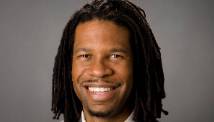
By LZ Granderson, CNN Contributor
 11:20 AM EDT, Tue June 12, 2012

(CNN) -- When my son was in middle school, I remember attending one of his school band concerts that wasn't very good.
In fact, it sucked.
At times, it sounded as if half the band was playing one song and the other half was playing something totally different. And because I don't want my son to grow up to be a loser, I told him straight out what I thought.
LZ Granderson
LZ Granderson
"How was it?" he asked.
Navy SEAL delivers commencement speech
Best advice for 2012 grads is ...
Perry on tough love for students
Steve Jobs in 2005: No one wants to die
"It was pretty bad," I said.
"I know, right?" my son agreed, smiling. "We're not good at all."
And then we both laughed until we had tears in our eyes.
I don't claim to know everything about parenting, but I do know parents do their children a disservice by constantly sugarcoating their shortcomings to protect their feelings. I can't think of a more surefire way to raise a loser than not allowing a child to learn what it really takes to be a winner.
Not that everything in life is a competition. But if children can't handle competition when it's necessary, or take some criticism, or never strive to be better because their parents inadvertently programmed them to believe they are already the best even when they're not, then they are in for some serious shocks and bumps down the road.
That's the part of the discussion that's missing from all the chatter about David McCullough Jr.'s controversial "You Are Not Special" commencement speech. He didn't call the Wellesley High School Class of 2012 a bunch of lowlifes who won't amount to anything. Rather, he was adjusting their lenses so that they could see the world they were about to enter more clearly.
"Across the country no fewer than 3.2 million seniors are graduating about now from more than 37,000 high schools," McCullough said. "That's 37,000 valedictorians... 37,000 class presidents... 92,000 harmonizing altos... 340,000 swaggering jocks ... 2,185,967 pairs of Uggs. But why limit ourselves to high school? After all, you're leaving it. So think about this: Even if you're one in a million, on a planet of 6.8 billion that means there are nearly 7,000 people just like you."
One man's "ouch" is another man's "right on brother," and you can count me among the latter.
My son is special ... to me.
He is special to his mother, grandparents, aunts, uncles and friends.
But he is not special to everyone, and he is not great at everything. None of us are.
If the students at Wellesley didn't know this before their last moments of high school, I am glad McCullough was there to help them out before life taught them that lesson in less forgiving ways.
Some folks have faulted McCullough, an English teacher at Wellesley, for his tough words. Sure, the job of high school teachers is not to tear down students' self-esteem. But it's certainly not to inflate students' sense of self-worth with a bunch of unearned compliments and half-truths.
There is a middle ground where "how things are" and "how things can be" meets. It is at this middle point where growth happens. But if parents, teachers and the other adults in a child's life never acknowledge "how things are" -- no matter how good the intention may be -- then they are denying that child an opportunity to mature, to develop a strong sense of self-confidence that can only be earned by recognizing shortcomings and dealing with disappointments and failures.
"And I hope you caught me when I said 'one of the best,' " McCullough said. "I said 'one of the best' so we can feel better about ourselves, so we can bask in a little easy distinction, however vague and unverifiable, and count ourselves among the elite, whoever they might be, and enjoy a perceived leg up on the perceived competition. But the phrase defies logic. By definition there can be only one best. You're it or you're not."
Which is why McCullough also talked about the importance of pursuing passions for the sake of passions, rather than seeking accolades or striking off items from an arbitrary checklist. Accolades and lists may tell us about accomplishments, but life is meant to be experienced, not just accomplished. It's like the difference between reading books for the sake of reading and reading books just to get a good grade. Tell me, once you're done with school, are you then supposed to be done with reading books? I sure hope not.
McCullough's point was that students should focus less on being seen as special and instead understand that living life is special in and of itself. As Rudyard Kipling so eloquently stated in his poem "If":
If you can dream -- and not make dreams your master;If you can think -- and not make thoughts your aim; If you can meet with triumph and disaster And treat those two imposters just the same;
The synopsis of "You Are Not Special" may seem scathing, but I found the speech to be quite uplifting, and I shared it with my son. He has another three years to go before graduating from high school, but I always like to remind him that his family and friends think the world of him -- and for the most part, just about everyone else on this planet doesn't give a damn about him. That's not mean or cruel, good or bad, that's just the reality of life. And that's OK -- everyone is special to someone, but no one is special to all.

Thursday, June 7, 2012

The Old Guys In the Room

Let's play a quick game. I'm going to name an industry and you think of some prominent names that come to mind and we'll see if the people I name jibe with those you thought of. Ok? Let's try it and see what happens. Try not to look under the heading or title somehow!

Movies
Wil Smith, George Clooney, Brad Pitt, Michael Fassbender

Action Movies
The Rock, Jason Statham, Liam Neeson, Robert Downey Jr., Christian Bale

Sports
Kobe Bryant, Kevin Garnett, Peyton Manning, David Beckham

Did any of these guys cross your mind at all? Were any of them the first you thought about? I guess you're wonder what my point is. My point is this; the proverbial fountain of youth is what our modern leading man has seemed to find. The average age of these guys is 42 years old. That seems old, but according to who?

For years humans have fought the battle against aging. Whether by  means such as plastic surgery , or dressing 'younger' or dating people half their age. This obviously is an innate fear of our own mortality, to think of the frailty of life or getting old is to have essentially died in some way. Men have the fear and fight it just as much as women. It's so funny how people under 30 think being in your thirties means you're old. People in their thirties think that people in their 50's are old and so on. It's the never-ending quest to remain young. The Peter Pan construct.

I look at my parents and they are about to hit 60 and though physically they are not who they once were, they are mentally. I used to have a fear of growing older and believing the false doctrine that certain things should be accomplished by a certain age, but I no longer subscribe to that. Why? Because it places undue pressure on one's self to do something simply because you 'think' or people 'expect' you to do it by a certain age. Yes, the clock does tick with our bodies because we are living, breathing things, and therein lies the rub-if you are a living thing, then you must one day cease to live. It's the natural order of things. Once you embrace that, it makes things so much easier. I look at my son and see this child with so much life ahead of him, and am thankful and hopeful that I can spend much of it with him. For him to bury me in my ripe old age(Lord willing) means completion of my life circle; but his goes on, because of the life I lived and the fact that I brought him here.

I say all this to say that today, just one day short of my 35th birthday I am thankful. I feel better than I ever have in life before. Better mentally, better emotionally, better physically. I'm wiser than I was last year, stronger, and just as fast as I was at 22 years old (well, close-I've only lost a second off my sprint times!). As I look at the aforementioned who come to the forefront of our minds in their respective fields, I'm filled with joy because I know my best years are still ahead!


Monday, May 21, 2012

George F. Will and the War on Drugs

George F. Will is a well-known conservative writer, but he took a turn away from his mostly conservative leanings and spoke out against what is affectionately known as the "War on Drugs". This abject failure of a so-called 'war' has left our harshly punitive criminal/prison system overcrowded with mostly non-violent offenders and families and lives decimated in it's wake.


The war on drugs: time to face facts


Last Updated: 11:48 PM, April 13, 2012
Posted: 10:38 PM, April 13, 2012


headshotGeorge F. Will
Amelioration of today’s drug problem requires Americans to understand the significance of the 80/20 ratio. Twenty percent of American drinkers consume 80 percent of the alcohol sold here. The same 80-20 split obtains among users of illicit drugs.
About 3 million people — less than 1 percent of America’s population — consume 80 percent of illegal hard drugs. Drug-trafficking organizations can be most efficiently injured by changing the behavior of the 20 percent of heavy users, and we are learning how to do so. Reducing consumption by casual users will not substantially reduce the northward flow of drugs or the southward flow of money.

AP
Police at Thursday night's fatal drug bust in New Hampshire

Americans’ experience with marketing’s power inclines them to favor prohibition and enforcement over legalization and marketing of drugs. But this choice has consequences: More Americans are imprisoned for drug offenses or drug-related probation and parole violations than for property crimes.
And although America spends five times more jailing drug dealers than it did 30 years ago, the prices of cocaine and heroin are 80 percent to 90 percent lower than 30 years ago.
In “Drugs and Drug Policy: What Everyone Needs to Know,” policy analysts Mark Kleiman, Jonathan Caulkins and Angela Hawken argue that imprisoning low-ranking, street-corner dealers is pointless: A $200 transaction can cost society $100,000 for a three-year sentence.
And imprisoning large numbers of dealers produces an army of people who, emerging from prison with blighted employment prospects, can only deal drugs. Which is why, although a few years ago Washington, DC, dealers earned an average of $30 an hour, today they earn less than the federal minimum wage ($7.25).
Dealers, aka “pushers,” have almost nothing to do with initiating drug use by future addicts; almost every user starts when given drugs by a friend, sibling or acquaintance. There is a staggering disparity between the trivial sums earned by dealers who connect the cartels to the cartels’ customers, and the huge sums spent trying to slow the flow of drugs to those street-level dealers.
Kleiman et al say that in developed nations, cocaine sells for about $3,000 per ounce — almost twice the price of gold. And the supply of cocaine, unlike that of gold, can be cheaply and quickly expanded. But in the countries where cocaine and heroin are produced, they sell for about 1 percent of their US retail price.
If cocaine were legalized, a $2,000 kilogram could be FedExed from Colombia for less than $50 and sold profitably in America for a small markup from its price in Colombia, and a $5 rock of crack might cost 25 cents. Criminalization drives the cost of the smuggled kilogram in America up to $20,000. But then it retails for more than $100,000.
People used to believe enforcement could raise prices but doubted that higher prices would decrease consumption. Now they know consumption declines as prices rise but wonder whether enforcement can substantially affect prices.
They urge rethinking the drug-control triad of enforcement, prevention and treatment because we have been much too optimistic about all three.
Cartels have oceans of money for corrupting enforcement because drugs are so cheap to produce and easy to renew. So it is not unreasonable to consider modifying a policy that gives hundreds of billions of dollars a year to violent organized crime.
Marijuana probably provides less than 25 percent of the cartels’ revenues. Legalizing it would take perhaps $10 billion from some bad and violent people, but the cartels would still make much more money from cocaine, heroin and methamphetamines.
Sixteen states have legalized “medical marijuana.” In 1990, 24 percent of Americans supported full legalization. Today, 50 percent do. In 2010, in California, where one-eighth of Americans live, 46 percent of voters supported legalization, and some opponents were marijuana growers who like the profits from prohibition.
Would the public-health problems resulting from legalization be a price worth paying for injuring the cartels and reducing the costs of enforcement? We probably are going to find out.


Friday, May 11, 2012

Government Jobs and the Black Middle Class


Resentment And Race In Reducing Government

Zervas / Flickr
The U.S. Postal Service is planning a downsizing, which could disproportionately hurt African Americans,
The black middle class has been hit particularly hard by the recession; many of the economic gains earned over 50 years disappeared between 2007 and 2009.
The foreclosure crisis, lack of accumulated  wealth and the role of a college education in boosting job prospects have all contributed to the decline of the black middle class. Another big factor: cuts to government jobs. Much of the black middle class was built upon public sector jobs, which for decades allowed African Americans to circumvent discrimination in the private sector.
African Americans are over-represented in government jobs [PDF]. So even as the economyslowly adds jobs, government job losses continue to rack up, disproportionately affecting African Americans. Reducing government has been a hot political topic since 2010, particularly with the surge of the tea party movement, which has been accused of having racist undertones. But NPR points out that 70 percent of government job cuts happened in 12 states, all with Republican-controlled legislative bodies, and suggests that such job cuts have fostered resentment among African Americans. From NPR:
What Republicans call an attack on “big government,” many blacks see as an attack on their livelihoods, given their heavy reliance on the public sector for employment.
[Steven] Pitts, the Berkeley economist, calls it “nonracial policies with racialized outcomes.”
The country has 586,000 fewer government jobs now than it did in 2008.

Thursday, May 3, 2012

The 'Relative' Meaning of 'White Privilege'


White Privilege

By Ta-Nehisi Coates 
APR 27 2012, 4:40 PM ET 238

grouponbarrington.jpg

There's a very nice note in the comments section for my post below this one from a gentleman who was kind enough to read my memoir:

I read 'The Beautiful Struggle' a few weeks ago (& enjoyed it very much, & found it very affecting: sincere big thanks). In many ways, our childhoods and adolescences couldn't be more different: I'm a white guy from a comfortably affluent family who grew up a few years after you (crack still a power but very much on the downswing) in a medium sized, uglily-segregated city in the midwest. 

I was given all sorts of privileges withheld from you, and grew up in a much less hostile world. I'm a little uncomfortable making comparisons: I'd be an awful jackass to diminish your experiences in any way. With that said: while in objective terms, our middle school years were very different, I really recognized atmosphere you portrayed, and that recognition had a lot to do w/ how effective it was for me, despite different settings. I'm not sure exactly what point I want to make: certainly not that privileged white boys can be self involved, though there is a little of that ... something vague and ill-thought-out about universality and uniqueness in how adolescence is experienced, I guess.

I want to stress that I really appreciate this note. While I wrote thinking mostly about a young black kid who might find himself in the sort of situation I found myself as an adolescent, I also wanted the book to be open and hoped that people who were nothing like me might find something in there. With that said, I want to offer something that may do well to tie up the past week of discussion.

I don't want to speak for any other black person, or any other black writer, but it needs to be understood that my identity isn't founded on the losing end of "white privilege." I understand the use of that term for social scientists and perhaps literature critics. But I generally find it most powerful and most illuminating when linked to an actual specific privilege--not fearing sexual violence, not weighing one's death against the labor of birthing, living in a neighborhood bracketed off by housing covenants, not having to compete for certain jobs etc. In its most general invocation, I'm often repulsed because I think these sorts of questions often break down in the face of actual individuals.

The world of the individual--and often the black individual--is the space where I write. It is true that I can tell you how racism--indirectly and directly--affected my life. But you should also know that I truly believe that I had the best pair of parents in the world, that I had six brothers and sisters (sometimes more) who took care of me. That my mother taught me to read when I was four, that my father put me to work when I was six. That my brother Malik taught me D&D when I was seven, that my brother Big Bill fed me hip-hop from the time I was eight till this very day. That my house was filled with books which I was given the privilege to dive in and out of. That my father published and printed books which gave a sense of Do For Self.

That at Lemmel Middle School, I had teachers who went to war on my behalf. That I was a drummer for Sankofa Dance Company, and learned, not simply how to play, but how to shave a goat-skin and construct a drum-head. That I used to rhyme with Big Bill up on Wabash, and for all my awful flow, no one kicked me out. That the same boys who tortured me in seventh grade, repeatedly saved my ass in eighth grade. That throughout my young life someone more street-wise than me often took me under their wing and looked out.

In short--you need to know that I was privileged. I can run you all kinds of stats on the racial wealth gap and will gladly discuss its origins. But you can't really buy two parents like I had. Money can buy experience and exposure--but it can't make you want those things. It can't make your parents curious about the world. It can't make them moral, compassionate and caring. It can't make them love their children. As I have moved on up, in that old Jeffersonian sense, I have seen families who allegedly were more privileged. But ultimately I find merit in who they are as humans. I am unconvinced that money trumps all of their flaws

White commenters who were financially "better off" than me should assume only that, and no more. They should certainly not assume they were more privileged. I certainly do not. It is the privileges which I experienced, as an individual, that brings me here. If you read something on this blog, or in one of my books, that resonates, holler at me. Don't apologize. Don't feel guilty. The guilt isn't about me anyway.  Address me straight up. You didn't do anything to me. And fanatically believing in "Coatesian Exceptionalism," I can't even concede that you had more than me.

I was privileged. I got love for you. But I would not trade with you:)

Bon weekend, folks.